Buy rb.co.at ?
We are moving the project
rb.co.at .
Are you interested in purchasing the domain
rb.co.at ?
domain@kv-gmbh.de · 0541-91531010
Buy rb.co.at ?
Is the entire football training cancelled tomorrow in principle?
No, the entire football training is not cancelled tomorrow in principle. The decision to cancel the training would depend on specific circumstances such as weather conditions, facility availability, or any other unforeseen events. It is important to check with the coach or team officials for the most accurate and up-to-date information regarding the status of the training. **
What is the economic principle: the principle of minimum or the principle of maximum?
The principle of minimum and the principle of maximum are economic principles that relate to decision-making. The principle of minimum states that individuals or firms will seek to minimize their costs or inputs in order to achieve a certain level of output or outcome. On the other hand, the principle of maximum states that individuals or firms will seek to maximize their benefits or outputs given a certain level of inputs or costs. Both principles are important in guiding economic decision-making and resource allocation. **

Similar search terms for Principle
Top-Angebote
Products related to Principle:
-
Stephen R. Covey Collection 3 Books Set (8th Habit, First Things First,Principle)Description. The 8th Habit: From Effectiveness to Greatness. In the 7 Habits series, international bestselling author Stephen R. Covey showed us how to become as effective as it is possible to be. In his long-awaited new book, THE 8th HABIT, he opens up an entirely new dimension of human potential, and shows us how to achieve greatness in any position and any venue. All of us, Covey says, have within us the means for greatness. To tap into it is a matter of finding the right balance of four human attributes: talent, need, conscience and passion. At the nexus of these four attributes is what Covey calls voice - the unique, personal significance we each possess. Covey exhorts us all to move beyond effectiveness into the realm of greatness - and he shows us how to do so, by engaging our strengths and locating our powerful, individual voices. .... First Things First by Stephen R. Covey. Principle-centered Leadership by Covey, Stephen R. (1999). Title. Stephen R. Covey Collection 3 Books Set (8th Habit, First Things First,Principle). Delivery. Content. Reviews99,99 £*Shipping: 0,00 £Secure redirect to the provider
-
Algonquin Books The Nature Principle: Reconnecting With Life In A Virtual Age - Non Fiction - PaperbackTitle:. The Nature Principle: Reconnecting With Life In A Virtual Age Format: Paperback Overview:. In an era defined by scrolling screens, remote meetings, and constant digital notifications, humans have quietly drifted away from the natural world that shaped their evolutionary development. The Nature Principle explores this profound disconnect and offers a compelling roadmap back to better health, sharper thinking, and deeper fulfillment. Written by acclaimed journalist and award-winning author Richard Louv, this essential non-fiction guide draws on cutting-edge neuroscience, psychology, and real-world case studies to demonstrate how everyday exposure to nature fundamentally alters brain function, immune response, and emotional stability. Rather than presenting nature visits as a luxury or an escape, Louv positions them as a biological necessity and a practical strategy for thriving in modern life. Packed with accessible research, vivid anecdotes, and actionable advice, the book bridges the gap between scientific evidence and daily habit formation. It addresses how urban environments, workplace culture, and family routines can be redesigned to incorporate green spaces, outdoor learning, and mindful immersion. Readers will discover why seemingly simple acts such as walking beneath tree canopy, observing shifting wildlife, or tending to indoor plants deliver measurable improvements in focus, resilience, and creative problem-solving. This paperback edition brings together decades of environmental observation into a single, portable reference point for anyone seeking to reclaim balance amidst technological overload. What Makes This Book Stand Out:. What truly sets this volume apart from conventional wellness literature is its rigorous foundation in developmental biology and clinical psychology combined with a highly practical approach to urban living. Louv avoids vague appeals to simply get outdoors by explaining precisely how biophilic design, sensory engagement with soil and foliage, and unstructured outdoor time recalibrate the nervous system after prolonged screen reliance. The narrative deliberately dismantles the false dichotomy between productivity and presence, showing how nature immersion actually amplifies cognitive output rather than detracting from it. Every chapter transitions seamlessly from theoretical insight to immediate application, whether that involves adapting home office layouts with live green elements, restructuring weekend activities away from organized digital pastimes, or designing neighborhood walks that prioritize ecological awareness over destination speed. The writing maintains an authoritative yet conversational tone, making complex neurobiological concepts digestible for everyday decision-making. By framing nature not as a recreational break but as a core operating system for mental clarity and physical vitality, the book delivers a lasting framework that adapts to city apartments, suburban yards, and rural...15,99 £*Shipping: 2,99 £Secure redirect to the provider
-
Richard Koch Collection 2 Books Set The 80/20 Principle Achieve More,80/20 DailyDescription. Condition: BRAND NEW. Format: Paperback. 80/20 Daily: Your Day-by-Day Guide to Happier, Healthier, Wealthier, and More Successful Living Using the 8020 Principle. THE UNIVERSE IS WONKY! Out of 300 movies released over 18 months, just 4 of them took 80% of box office receipts. Daily life is full of relationships like this. When you discover asymmetries in your own life, you can find ways to multiply results with much less effort, stress, time or money.80/20 DAILY is million-copy bestselling author Richard Koch's most accessible exploration to date of the potential of 80/20 to transform your life. It features a year's worth of powerful daily insights to inspire you identify the 20% in your life that works so brilliantly you should be doing more of it - and far less of the 80% that is taking you nowhere..... The 80/20 Principle: Achieve More with Less: THE PROVEN WAY TO VASTLY INCREASE PRODUCTIVITY, EFFECTIVENESS AND SUCCESS. Millions of highly effective people have become more successful by understanding the simple fact that 80% of your results come from 20% of your efforts. All you have to do is identify the 20 percent that leads to 80 percent. The 80/20 Principle shows you how.Richard Koch's million-copy-selling global bestseller is now completely revised and updated, and more powerful and essential than ever. He reveals how the principle works and shows how to use it in a systematic and practical way to vastly increase your effectiveness, and improve your career..... Title. Richard Koch Collection 2 Books Set The 80/20 Principle Achieve More,80/20 Daily. Delivery. Content. Reviews20,99 £*Shipping: 2,99 £Secure redirect to the provider
-
John Murray The 80/20 Principle : The Secret of Achieving More with Less: by Richard KochREAD THIS BOOK AND USE IT - TIM FERRISS Twenty years after its first publication, The 80/20 Principle is a global bestseller read by millions of highly effective people around the world. Now, it is more powerful and essential than ever. In the past, the principle gave those who used it a serious advantage.In the future, it will be the essential tool for anyone who wants to succeed. And it is powerful. Based on the counter-intuitive but widespread fact that 80% of results flow from 20% of causes, The 80/20 Principle shows how you can achieve much more with much less effort, time and resources, simply by concentrating on the all-important 20%.This major new edition includes four brand new chapters showing how to: Use the rise of networks to your advantage Benefit from more acute 90/10 and 99/1 forms of the principle Tap into your subconscious to exert a super-potent and amazingly favourable influence on your life Enjoy greater success with 5 mega rules to live by5,95 £*Shipping: 2,99 £Secure redirect to the provider


-
What is the principle of the key-lock principle?
The key-lock principle is based on the idea that certain molecules or structures (keys) can fit into specific receptors or binding sites (locks) with high specificity and affinity. This principle is commonly used to describe the interaction between enzymes and their substrates, where the enzyme (lock) has a specific active site that perfectly fits the substrate (key), allowing for efficient catalysis. The key-lock principle highlights the importance of complementary shapes and chemical properties between molecules for effective interactions to occur. **
-
What is the ping-pong principle or the hourglass principle?
The ping-pong principle, also known as the hourglass principle, is a communication strategy where information is exchanged back and forth between two parties in a structured and concise manner. It involves each party taking turns to speak or provide input, similar to a game of ping-pong. This principle ensures that communication is balanced, effective, and allows for active listening and engagement from both parties. It helps to maintain a focused and productive conversation by preventing one party from dominating the discussion. **
-
What is the rocket principle and the principle of recoil?
The rocket principle states that for every action, there is an equal and opposite reaction. This means that when a rocket expels gas out of its engines, the force of the gas pushing out is matched by an equal force pushing the rocket in the opposite direction. The principle of recoil is similar, stating that when a gun is fired, the force of the bullet being expelled from the barrel is matched by an equal force pushing the gun in the opposite direction. Both principles are based on Newton's third law of motion, which describes the relationship between the forces acting on two interacting objects. **
-
What are the principle of operation and the principle of object?
The principle of operation refers to the fundamental method or process by which something functions or operates. It outlines the underlying rules or guidelines that govern how a system or device works. On the other hand, the principle of object pertains to the main focus or purpose of a particular entity or concept. It defines the central idea or goal that the object is designed to achieve or represent. Both principles are essential in understanding the functionality and significance of a system or object. **


Does the principle of solidarity correspond to the principle of equivalence?
The principle of solidarity and the principle of equivalence are related but not the same. The principle of solidarity emphasizes mutual support and collective responsibility within a community, while the principle of equivalence focuses on equal treatment and fairness. Solidarity often involves individuals or groups providing assistance or resources to those in need, even if they have not contributed equally, whereas equivalence typically requires treating individuals or groups in the same way based on certain criteria. Both principles aim to promote fairness and justice, but they operate in slightly different ways. **
What is the principle of maximization or the principle of minimization?
The principle of maximization or minimization is a decision-making principle that involves choosing the best option from a set of alternatives in order to maximize benefits or minimize costs. In economics, this principle is often applied to the behavior of individuals, firms, or governments when making choices about resource allocation, production, consumption, or investment. The principle of maximization suggests that decision-makers seek to maximize their utility, profits, or other desirable outcomes, while the principle of minimization suggests that decision-makers seek to minimize their costs, risks, or other undesirable outcomes. These principles are fundamental to understanding how economic agents make rational choices in pursuit of their goals. **
Top-Angebote
Products related to Principle:
-
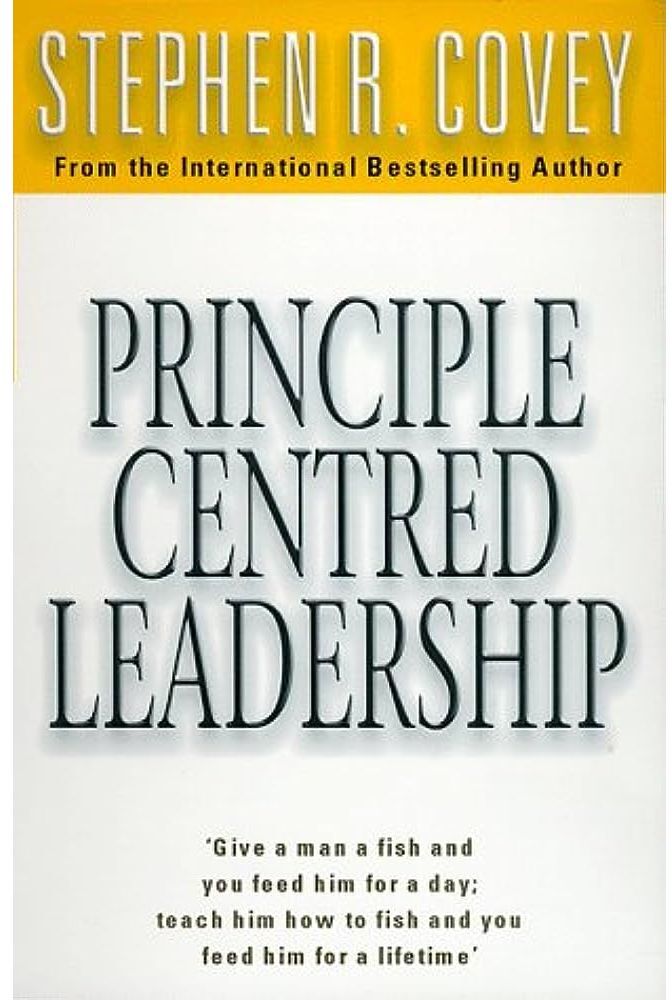
Simon & Schuster Principle Centred Leadership by Stephen R CoveyPRINCIPLE CENTRED LEADERSHIP will help solve these dilemmas - and many others:* how do we achieve a wise and renewing balance between work and family in the midst of constant pressures and crises?* how do we unleash the creativity, talent and energy of the vast majority of the work force, whose jobs neither require nor reward such resources?* how can we have a culture characterised by change, flexibility and continuous improvement and still maintain a sense of stability and security?* how do we create team spirit and harmony among people and departments that have been criticising and attacking each other for years?* how do we get people and culture aligned with strategy, so that everyone in an organisation is as committed to the strategy as those who formulated it?6,99 £*Shipping: 2,99 £Secure redirect to the provider
-
The 80/20 Principle Expanded and Updated by Richard Koch - Non Fiction - PaperbackTitle:. The 80/20 Principle, Expanded and Updated: The Secret to Achieving More with Less Condition: BRAND NEW. Format: Paperback. ISBN: 9780385491747 Overview:. Discover a timeless rule of effectiveness that flips conventional busyness on its head. The 80/20 principle reveals that a minority of inputs generates the majority of outcomes. In business and in life, a small 20 per cent often yields 80 per cent of results. This expanded and updated edition by Richard Koch builds on the original framework and translates it into practical, rinse-and-repeat steps you can apply today. Learn to identify the few activities, customers, products, and time expenditures that truly move the needle, then reallocate your energy to them. The book presents a clear method for evaluating choices, cutting away low-leverage tasks, and designing processes that multiply impact with less effort, time, and resources. It emphasises disciplined focus, smarter decision-making, and a bias toward high-value actions. Whether you’re leading a team, growing a business, or aiming for personal efficiency, the 80/20 principle becomes a daily habit rather than a one-off trick. The updated edition also reflects modern work realities—digital tools, remote collaboration, and rapidly changing markets—while preserving the simplicity that made the idea so enduring. The result is a concise, readable guide you can revisit again and again to unlock greater productivity, stronger results, and a calmer, more purposeful career or enterprise. What Makes This Book Stand Out:. Distinguishing it is the insistence that success is not about doing more, but about doing the right things. Koch pairs a simple, testable rule with practical tools you can apply in meetings, budgeting, and planning sessions. The expanded edition adds timely examples and revised guidance that speak to today’s digital landscape while preserving the core idea of leverage. Readers gain a clear framework for assessing activities, trimming busywork, and reorienting projects toward high-leverage outcomes. It’s ideal for managers seeking sharper strategy, entrepreneurs looking to scale with efficiency, and individuals who want more impact from less effort. The tone remains straightforward, accessible, and immediately useful, making it easy to discuss with colleagues and implement across teams. Who This Book Is Perfect For:. Whether you’re a senior executive juggling multiple projects, a founder refining your business model, a student trying to optimise study time, or a parent balancing work and family, this book speaks to anyone who wants higher impact with less effort. It’s equally valuable for teams embracing lean processes, coaches guiding performance improvements, and readers who love practical, no-nonsense approaches to productivity. If you’ve felt overwhelmed by the volume of tasks and meetings, the 80/20 principle offers a reliable framework to prioritise and protect time for what truly matters. Key Highlights:. Identify the 20...7,99 £*Shipping: 2,99 £Secure redirect to the provider
-
Stephen R. Covey Collection 3 Books Set (8th Habit, First Things First,Principle)Description. The 8th Habit: From Effectiveness to Greatness. In the 7 Habits series, international bestselling author Stephen R. Covey showed us how to become as effective as it is possible to be. In his long-awaited new book, THE 8th HABIT, he opens up an entirely new dimension of human potential, and shows us how to achieve greatness in any position and any venue. All of us, Covey says, have within us the means for greatness. To tap into it is a matter of finding the right balance of four human attributes: talent, need, conscience and passion. At the nexus of these four attributes is what Covey calls voice - the unique, personal significance we each possess. Covey exhorts us all to move beyond effectiveness into the realm of greatness - and he shows us how to do so, by engaging our strengths and locating our powerful, individual voices. .... First Things First by Stephen R. Covey. Principle-centered Leadership by Covey, Stephen R. (1999). Title. Stephen R. Covey Collection 3 Books Set (8th Habit, First Things First,Principle). Delivery. Content. Reviews99,99 £*Shipping: 0,00 £Secure redirect to the provider
-
Algonquin Books The Nature Principle: Reconnecting With Life In A Virtual Age - Non Fiction - PaperbackTitle:. The Nature Principle: Reconnecting With Life In A Virtual Age Format: Paperback Overview:. In an era defined by scrolling screens, remote meetings, and constant digital notifications, humans have quietly drifted away from the natural world that shaped their evolutionary development. The Nature Principle explores this profound disconnect and offers a compelling roadmap back to better health, sharper thinking, and deeper fulfillment. Written by acclaimed journalist and award-winning author Richard Louv, this essential non-fiction guide draws on cutting-edge neuroscience, psychology, and real-world case studies to demonstrate how everyday exposure to nature fundamentally alters brain function, immune response, and emotional stability. Rather than presenting nature visits as a luxury or an escape, Louv positions them as a biological necessity and a practical strategy for thriving in modern life. Packed with accessible research, vivid anecdotes, and actionable advice, the book bridges the gap between scientific evidence and daily habit formation. It addresses how urban environments, workplace culture, and family routines can be redesigned to incorporate green spaces, outdoor learning, and mindful immersion. Readers will discover why seemingly simple acts such as walking beneath tree canopy, observing shifting wildlife, or tending to indoor plants deliver measurable improvements in focus, resilience, and creative problem-solving. This paperback edition brings together decades of environmental observation into a single, portable reference point for anyone seeking to reclaim balance amidst technological overload. What Makes This Book Stand Out:. What truly sets this volume apart from conventional wellness literature is its rigorous foundation in developmental biology and clinical psychology combined with a highly practical approach to urban living. Louv avoids vague appeals to simply get outdoors by explaining precisely how biophilic design, sensory engagement with soil and foliage, and unstructured outdoor time recalibrate the nervous system after prolonged screen reliance. The narrative deliberately dismantles the false dichotomy between productivity and presence, showing how nature immersion actually amplifies cognitive output rather than detracting from it. Every chapter transitions seamlessly from theoretical insight to immediate application, whether that involves adapting home office layouts with live green elements, restructuring weekend activities away from organized digital pastimes, or designing neighborhood walks that prioritize ecological awareness over destination speed. The writing maintains an authoritative yet conversational tone, making complex neurobiological concepts digestible for everyday decision-making. By framing nature not as a recreational break but as a core operating system for mental clarity and physical vitality, the book delivers a lasting framework that adapts to city apartments, suburban yards, and rural...15,99 £*Shipping: 2,99 £Secure redirect to the provider
-
Is the entire football training cancelled tomorrow in principle?
No, the entire football training is not cancelled tomorrow in principle. The decision to cancel the training would depend on specific circumstances such as weather conditions, facility availability, or any other unforeseen events. It is important to check with the coach or team officials for the most accurate and up-to-date information regarding the status of the training. **
-
What is the economic principle: the principle of minimum or the principle of maximum?
The principle of minimum and the principle of maximum are economic principles that relate to decision-making. The principle of minimum states that individuals or firms will seek to minimize their costs or inputs in order to achieve a certain level of output or outcome. On the other hand, the principle of maximum states that individuals or firms will seek to maximize their benefits or outputs given a certain level of inputs or costs. Both principles are important in guiding economic decision-making and resource allocation. **
-
What is the principle of the key-lock principle?
The key-lock principle is based on the idea that certain molecules or structures (keys) can fit into specific receptors or binding sites (locks) with high specificity and affinity. This principle is commonly used to describe the interaction between enzymes and their substrates, where the enzyme (lock) has a specific active site that perfectly fits the substrate (key), allowing for efficient catalysis. The key-lock principle highlights the importance of complementary shapes and chemical properties between molecules for effective interactions to occur. **
-
What is the ping-pong principle or the hourglass principle?
The ping-pong principle, also known as the hourglass principle, is a communication strategy where information is exchanged back and forth between two parties in a structured and concise manner. It involves each party taking turns to speak or provide input, similar to a game of ping-pong. This principle ensures that communication is balanced, effective, and allows for active listening and engagement from both parties. It helps to maintain a focused and productive conversation by preventing one party from dominating the discussion. **
Similar search terms for Principle
-
Richard Koch Collection 2 Books Set The 80/20 Principle Achieve More,80/20 DailyDescription. Condition: BRAND NEW. Format: Paperback. 80/20 Daily: Your Day-by-Day Guide to Happier, Healthier, Wealthier, and More Successful Living Using the 8020 Principle. THE UNIVERSE IS WONKY! Out of 300 movies released over 18 months, just 4 of them took 80% of box office receipts. Daily life is full of relationships like this. When you discover asymmetries in your own life, you can find ways to multiply results with much less effort, stress, time or money.80/20 DAILY is million-copy bestselling author Richard Koch's most accessible exploration to date of the potential of 80/20 to transform your life. It features a year's worth of powerful daily insights to inspire you identify the 20% in your life that works so brilliantly you should be doing more of it - and far less of the 80% that is taking you nowhere..... The 80/20 Principle: Achieve More with Less: THE PROVEN WAY TO VASTLY INCREASE PRODUCTIVITY, EFFECTIVENESS AND SUCCESS. Millions of highly effective people have become more successful by understanding the simple fact that 80% of your results come from 20% of your efforts. All you have to do is identify the 20 percent that leads to 80 percent. The 80/20 Principle shows you how.Richard Koch's million-copy-selling global bestseller is now completely revised and updated, and more powerful and essential than ever. He reveals how the principle works and shows how to use it in a systematic and practical way to vastly increase your effectiveness, and improve your career..... Title. Richard Koch Collection 2 Books Set The 80/20 Principle Achieve More,80/20 Daily. Delivery. Content. Reviews20,99 £*Shipping: 2,99 £Secure redirect to the provider
-
John Murray The 80/20 Principle : The Secret of Achieving More with Less: by Richard KochREAD THIS BOOK AND USE IT - TIM FERRISS Twenty years after its first publication, The 80/20 Principle is a global bestseller read by millions of highly effective people around the world. Now, it is more powerful and essential than ever. In the past, the principle gave those who used it a serious advantage.In the future, it will be the essential tool for anyone who wants to succeed. And it is powerful. Based on the counter-intuitive but widespread fact that 80% of results flow from 20% of causes, The 80/20 Principle shows how you can achieve much more with much less effort, time and resources, simply by concentrating on the all-important 20%.This major new edition includes four brand new chapters showing how to: Use the rise of networks to your advantage Benefit from more acute 90/10 and 99/1 forms of the principle Tap into your subconscious to exert a super-potent and amazingly favourable influence on your life Enjoy greater success with 5 mega rules to live by5,95 £*Shipping: 2,99 £Secure redirect to the provider
-
Sheila Chandra Banish Clutter Forever: How the Toothbrush Principle Will Change Your Life by Sheila ChandraDescription. Why is it that even the most disorganised person never seems to lose their toothbrush?. How can this simple fact solve all our clutter problems?. The Toothbrush Principle is a simple yet inspired approach to de-cluttering your home. Whether you live in a mansion or a bedsit, this book will show you how to: organise according to the unconscious blueprint that naturally tidy people have, so that getting and staying organised is easy; know what to throw away with confidence; set up your wardrobe so you get much more use out of the clothes you have; work from home productively in a clear, designated space; tame your inbox!. Step-by-step, room-by-room, you'll soon find that you hardly ever lose things, massive clear outs become a thing of the past and you never spend more than 10 minutes a day tidying up.. Title. Banish Clutter Forever: How the Toothbrush Principle Will Change Your Life by Sheila Chandra. Delivery. Content. Reviews11,13 £*Shipping: 2,99 £Secure redirect to the provider
-
Uplift Picks LED Hover Soccer Ball Indoor Air Power Football Toy For Kids Training And Play football GoalBring high energy fun indoors with this exciting LED hover soccer ball designed to glide smoothly across flat surfaces. Powered by air flow, it floats effortlessly while soft edges help protect furniture and walls. Bright LED lights add visual...59,00 $*Shipping: 0,00 $Secure redirect to the provider
-
What is the rocket principle and the principle of recoil?
The rocket principle states that for every action, there is an equal and opposite reaction. This means that when a rocket expels gas out of its engines, the force of the gas pushing out is matched by an equal force pushing the rocket in the opposite direction. The principle of recoil is similar, stating that when a gun is fired, the force of the bullet being expelled from the barrel is matched by an equal force pushing the gun in the opposite direction. Both principles are based on Newton's third law of motion, which describes the relationship between the forces acting on two interacting objects. **
-
What are the principle of operation and the principle of object?
The principle of operation refers to the fundamental method or process by which something functions or operates. It outlines the underlying rules or guidelines that govern how a system or device works. On the other hand, the principle of object pertains to the main focus or purpose of a particular entity or concept. It defines the central idea or goal that the object is designed to achieve or represent. Both principles are essential in understanding the functionality and significance of a system or object. **
-
Does the principle of solidarity correspond to the principle of equivalence?
The principle of solidarity and the principle of equivalence are related but not the same. The principle of solidarity emphasizes mutual support and collective responsibility within a community, while the principle of equivalence focuses on equal treatment and fairness. Solidarity often involves individuals or groups providing assistance or resources to those in need, even if they have not contributed equally, whereas equivalence typically requires treating individuals or groups in the same way based on certain criteria. Both principles aim to promote fairness and justice, but they operate in slightly different ways. **
-
What is the principle of maximization or the principle of minimization?
The principle of maximization or minimization is a decision-making principle that involves choosing the best option from a set of alternatives in order to maximize benefits or minimize costs. In economics, this principle is often applied to the behavior of individuals, firms, or governments when making choices about resource allocation, production, consumption, or investment. The principle of maximization suggests that decision-makers seek to maximize their utility, profits, or other desirable outcomes, while the principle of minimization suggests that decision-makers seek to minimize their costs, risks, or other undesirable outcomes. These principles are fundamental to understanding how economic agents make rational choices in pursuit of their goals. **
* All prices are inclusive of VAT and, if applicable, plus shipping costs. The offer information is based on the details provided by the respective shop and is updated through automated processes. Real-time updates do not occur, so deviations can occur in individual cases. ** Note: Parts of this content were created by AI.